Welcome to Rosie the Reviewer, a Dutch-Canadian female-led WW2 media podcast. A new episode airs every Friday!

Topic guide

The Hanks and Spielberg War Series: Band of Brothers, The Pacific and Masters of the Air

Band of Brothers, The Pacific and Masters of the Air: every Rosie the Reviewer episode on the Hanks and Spielberg war series, with our scores, interviews and an FAQ.

Illustration of two women with a microphone and bandanas, with the podcast title Rosie the Reviewer below them.

Band of Brothers, The Pacific and Masters of the Air are the three big Spielberg and Hanks war series, and we have reviewed every one of them, in three parts each. This page gathers all twelve episodes: the nine series reviews and our interviews with an actor from The Pacific, its principal writer and two actors from Masters of the Air.

Band of Brothers is where Rosie the Reviewer began: it is the show that we first watched together, on either side of the ocean, and it is the first episode we ever published. The three series since have different strengths. We talk about the writing, the casting and the history, which we discuss at length.

Each card links to the full episode.

Listen to every episode on this page
A new episode every Friday

Band of Brothers

Our very first episode, and the origin story: two friends who met online about twenty years ago and pressed play on Band of Brothers at the same time on either side of the ocean. Then we take on episodes 1 to 3: Currahee, Day of Days and Carentan, with Sobel against Winters, the D-Day jump and Blithe’s breakdown. It is also the debut of Maartje’s pile of unread books, which has been growing ever since.

Our angle: Whose stories does a war series tell? We start by admitting how male Band of Brothers is, and we love it anyway.

What we thought: No score yet: we rate the series in Part Three. Sam calls it “a great adaptation of a…mediocre book”, and Maartje points out that the closing card gets Blithe’s death wrong.

Further reading

Brothers in Battle, Best of Friends by Bill Guarnere and Babe Heffron: Sam read it and loved the sense of their friendship. Easy Company Soldier by Don Malarkey with Bob Welch: Maartje likes that it reads like a story.

Episodes 4 to 7: Replacements, Crossroads, Bastogne and The Breaking Point, which we call possibly the best of the series. Sam explains Market Garden and launches #JusticeForCobb, with honorary membership cards for the Roy Cobb fan club. Maartje tells the story of her grandfather’s wartime arrests in the Netherlands, and we test the theory that Hanks and Spielberg are allergic to women in their shows. No offence.

Our angle: Two women never get a conversation in this series. The head-shaving scene is its main look at women, and Renee Lemaire and Augusta Chiwy are merged or sidelined.

What we thought: No score yet. Bastogne and The Breaking Point are among Maartje’s favourites, and she has stood in the real locations. Sam loves these episodes and defends Roy Cobb to the last.

Further reading

Band of Brothers by Stephen E. Ambrose: the book behind the series, which we have both read. Sam’s verdict: the show is the better of the two.

Episodes 8 to 10: The Last Patrol, Why We Fight and Points. We arrive tired, without a rewatch and, in one case, hungover in solidarity with Nixon: Big Nix Energy. Then it gets serious: Webster as the outsider, the liberation of the camp, the Luz farm scene, Allied war crimes, the points lottery and Speirs, before we talk about how the show changed our lives and our friendship.

Our angle: Some scenes have not aged well. We refuse to laugh along with the Luz farm scene: rape by Allied soldiers at the end of the war is history people do not want to talk about.

What we thought: Full marks from both of us: five out of five. “It’s just never gonna get better,” says Maartje, who picks The Breaking Point and Bastogne; Sam’s favourites are the first and last episodes.

Further reading

Parachute Infantry by David Kenyon Webster: Webster’s own memoir, and a major source for Ambrose.

The Pacific

Three parts on the series, plus two interviews with the people who made it. If you want the wider story of the war against Japan on screen, see our guide to WW2 in the Pacific.

Returning guest Bec, a tour guide and self-confessed big Leckie head, reviews episodes 1 to 3 against Leckie’s Helmet for My Pillow and Sledge’s With the Old Breed: Guadalcanal, Basilone’s Medal of Honor and Melbourne. Bec calls it the post nine eleven war show. We love the theme, the letters to Vera and Leckie’s humanity, and have a lot to say about the lighting, the scattered narrative and a Basilone who comes across as a Captain America prototype.

Our angle: The Pacific is the most critical of the three series, willing to look at American actions as well as the enemy’s. Harder to watch, and more honest for it.

What we thought: Bec gives the first three episodes 7.5 out of ten (regurgitated peaches). We hold our scores for Part Three; Maartje now calls The Pacific her favourite of the three.

Further reading

Helmet for My Pillow by Robert Leckie book coverChina Marine by Eugene Sledge book cover

Bec’s picks: Helmet for My Pillow by Robert Leckie, the one book to read (the audiobook is read by James Badge Dale), and China Marine by Eugene Sledge.

Our friend Merc, a museum professional and history nerd, joins for episodes 4 to 6: Sledge in training and arriving at Pavuvu and Peleliu, Leckie on Cape Gloucester and in hospital, Basilone’s bond tour and Sledge’s missed goodbye with Sid Phillips. Leckie’s tent becomes the lending library of the Pacific, Leckie announces “I believe in ammunition”, and Sledge, as we read from his memoir, suspects God has forgotten where Pavuvu is.

Our angle: We set the memoirs next to the show, mark what it invents, and talk leadership: the middle episodes work best when old hands meet newcomers.

What we thought: Merc gives the whole show 7.5 out of ten (mortar rounds): it “loses a couple points for being disjointed, but gains a number for being extremely personal”. We hold our scores for Part Three.

Further reading

Sheer Misery by Mary Louise Roberts book coverThe Arsenal of Democracy by A. J. Baime book coverThe Taste of War by Lizzie Collingham book cover

Merc’s picks: Sheer Misery by Mary Louise Roberts on soldiers in battle, The Arsenal of Democracy by A. J. Baime on Detroit’s war production, and The Taste of War by Lizzie Collingham on food in WWII.

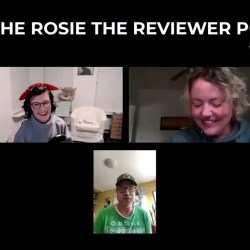
With George, we close out episodes 7 to 10: the end of Peleliu, Okinawa, Sledge’s loss and recovery of his humanity, the end of the war and the homecomings. We read memoir passages from Sledge and Leckie, including Leckie’s prayer about the atomic bomb. Along the way we decide Leckie’s memoir runs on at least forty percent pettiness and spite, and that Joe Mazzello was robbed of an Emmy.

Our angle: The end cards leave too much out, so we give Lena Basilone her full life back: “let’s allow her the grace to have had a real life.”

What we thought: George gives it 9 out of ten (in our hearts, Andy Haldane didn’t die and lived happily ever after), losing a point for the dark lighting. One of us gives it 9.5.

Further reading

With the Old Breed by Eugene Sledge: the memoir behind Sledge’s story, which we read from on air.

The show’s first actor guest and our first video episode. Scott Gibson played Lieutenant Andy Haldane and talks about building the role from Haldane’s letters, a brief and harsh boot camp in Australia (with a nickname from his trainer that we will not print), two cut scenes, including one with John Basilone, and Haldane’s death on Peleliu. He also describes his trip to Guam and Peleliu with the charity Beyond the Call, and passes on a Marine’s verdict on the rebuilt Peleliu airfield: “We’re marines man. We don’t do asphalt.”

Our angle: One memoir is one point of view. Scott Gibson shows how letters and other sources fill in the parts of a real man that a famous book leaves out.

What we thought: No score: it’s an interview. Scott’s advice, which we happily follow: “watch the Pacific as many times as you can really.”

Further reading

Devil Dogs by Saul David book cover

Devil Dogs by Saul David: Scott’s pick, on King Company, 3rd Battalion, 5th Marines, Haldane’s company, from Guadalcanal to Japan.

A long interview with Bruce McKenna, co-executive producer and principal writer of The Pacific, and writer of Bastogne, the Band of Brothers episode nobody else wanted. He explains how he built The Pacific around Leckie, Sledge and Basilone, the research with veterans and families, what he was not allowed to show, and the moment Spielberg told him “I don’t want to blink.” He has strong views, too: “I don’t call it the good war. I don’t think it was the good war. It was the necessary war.”

Our angle: Bruce McKenna tells us there is no such thing as historical drama, only good or bad drama, and all good drama is about us now.

What we thought: No score: it’s an interview. We come away thinking about theme over plot, and his plea not to define national identity through violence.

Further reading

Tennozan by George Feifer book coverTower of Skulls by Richard B. Frank book cover

McKenna’s picks: Tennozan by George Feifer, which he says strongly shaped how he wrote The Pacific, and Tower of Skulls by Richard B. Frank, on the Japanese war in China.

Masters of the Air

The newest of the three, on the 100th Bomb Group, plus our interview with two of its actors. For more bomber crews on screen, see our guide to The Eighth Air Force on Screen.

George lives near the East Anglian airbases, where the Eighth Air Force is still remembered, so he is the right man to start this series with. We compare it with Band of Brothers and The Pacific, then follow Egan and Cleven, the 100th Bomb Group’s first missions, Crosby’s navigation blunder over France, British versus American bombing doctrine and the Regensburg-Schweinfurt mission.

Our angle: Next to Band of Brothers and The Pacific, this is the more Hollywood one, and it sidesteps the ethics of the bombing it dramatises.

What we thought: No score yet: we rate the series in Part Three. One of us says it grew on her, one calls it the weakest of the three, and George finds it less cohesive than the others.

Further reading

Masters of the Air by Donald L. Miller: the book behind the series. Sam read it on holiday and finds it too quick to gloss over morale bombing. Navigator Harry Crosby’s own memoir, A Wing and a Prayer, is a must-read though.

Episodes 4 to 6: Quinn and Bailey with the French resistance, the first crew to finish 25 missions, Rosie Rosenthal’s arrival, Black Week, Egan shot down, Rosie’s rest at the flak house and Crosby meeting Sandra Westgate. We single out the Ken Lemons wheel scene and Hambone stuck on the escape hatch, and check the series against the real history, including that Bubbles Payne died in April 1944.

Our angle: The series keeps moving real events around to suit the drama, so we keep moving them back.

What we thought: No score yet: we rate the series in Part Three.

Further reading

Sweatin' Out the Mission by Malcolm Holland book cover

Sweatin’ Out the Mission by Malcolm Holland: George’s pick, a slim book on the ground crews who patched the planes and counted them home.

Episodes 7 to 9: Stalag Luft III, Black Monday on 6 March 1944, the Tuskegee Airmen, Crosby missing D-Day, the forced march and Operation Chowhound. We rate the series, compare it with Band of Brothers and The Pacific, mourn the material lost when eleven episodes became nine, and want to know what happened to Sandra’s spy plot and Bennett’s warning, which never pay off.

Our angle: The Tuskegee Airmen finally get an episode of their own. Pity the rest of the ending feels cut short.

What we thought: George gives it 7 out of ten (Buck Naked Mirror Monologues), and we give it about 8 and 6.5. All three of us still prefer The Pacific.

Further reading

Red Tail Captured, Red Tail Free by Alexander Jefferson and Lewis H. Carlson book cover

Red Tail Captured, Red Tail Free by Alexander Jefferson and Lewis H. Carlson: Sam’s pick, the memoir of a Tuskegee Airman who became a POW.
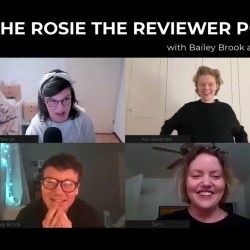
Bailey Brook and Kai Alexander play the evading airmen Bailey and Quinn, and tell us how their roles grew into episode four, why airmen chose to evade rather than surrender, the interrogation scene, a tour of real sites and their contact with the real Quinn family. We frame it all with Peter Eisner’s The Freedom Line and the Comet Line.

Our angle: Evading was a string of small steps, each leading to the next. The civilians who hid and guided the airmen along the Comet Line were very often women.

What we thought: No score: it’s an interview. Our favourite detail: Bailey and Kai hyperventilating while filming the Comet Line scenes.

Further reading

The Freedom Line by Peter Eisner book cover

The Freedom Line by Peter Eisner: our pick, on the Comet Line and the civilians, many of them women, who guided downed airmen to safety.

Keep Listening

Steven Spielberg is behind all three series on this page, and we have also reviewed four of his films. They pair well with this list:

Enjoyed this list?
Follow the show so you don’t miss the next one

Frequently Asked Questions About the Hanks and Spielberg War Series

In what order should I watch Band of Brothers, The Pacific and Masters of the Air?

They were released in the order of Band of Brothers (2001), The Pacific (2010) and Masters of the Air (2024, on Apple TV+). Band of Brothers and The Pacific have ten episodes each and Masters of the Air has nine. They are separate stories, so you can start with any of them. We reviewed each in three parts, which you can follow episode by episode.

We both gave Band of Brothers full marks, five out of five. Maartje says The Pacific is now her favourite of the three. In Ep 69 (Masters of the Air – Tuskegee Airmen, POW Marches and Closing Thoughts), we and our guest George all prefer The Pacific to Masters of the Air, and George rates Masters of the Air 7 out of ten.

Ep 30 (The Pacific Special with Actor Scott Gibson) is an interview with Scott Gibson, who played Lieutenant Andy Haldane in The Pacific. Ep 86 (Bruce McKenna on The Pacific, Band of Brothers) is an interview with Bruce McKenna, the principal writer of The Pacific and writer of the Band of Brothers episode Bastogne. Ep 52 (Masters of the Air Actors Bailey Brook and Kai Alexander) features the actors who play Bailey and Quinn in Masters of the Air.

Mostly, but not always, and we check as we go. In Band of Brothers, the closing card on Albert Blithe says he died in 1948, but he served in Korea and died in 1967. In Masters of the Air, Captain Joseph ‘Bubbles’ Payne Jr. is killed in October 1943, but he died on 28 April 1944.

Stay in touch

Get the newsletter

This week's episode, the ones we mentioned on air, a WWII anniversary and what we're reading.

Coming soon

Follow us

Tell us what you thought of an episode, suggest a film, series or book, or watch us on YouTube and read our reviews on Letterboxd.

Black t-shirt with the Rosie the Reviewer logo

Support the show

Rosie is a passion project, built episode by episode.